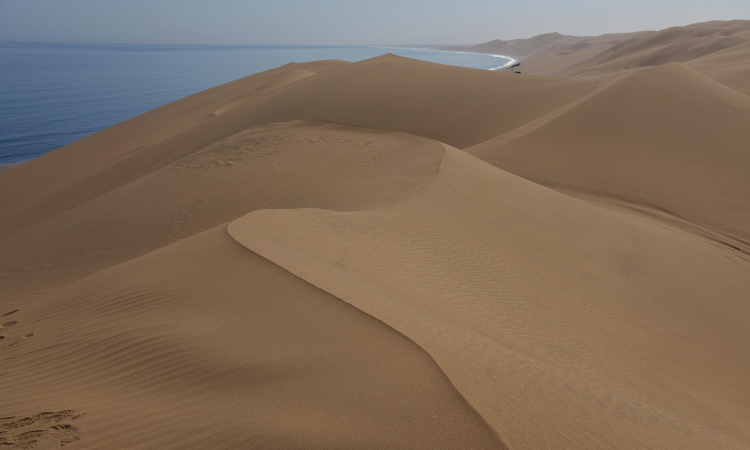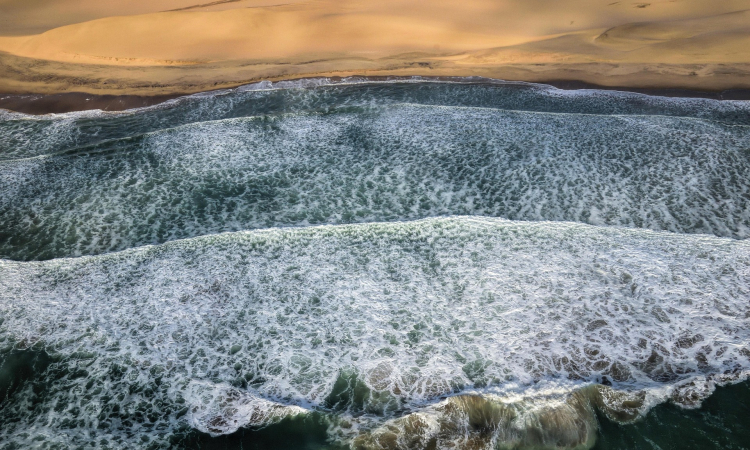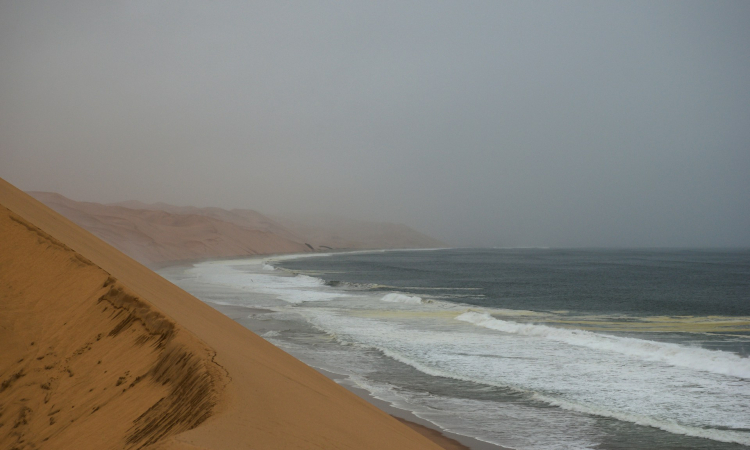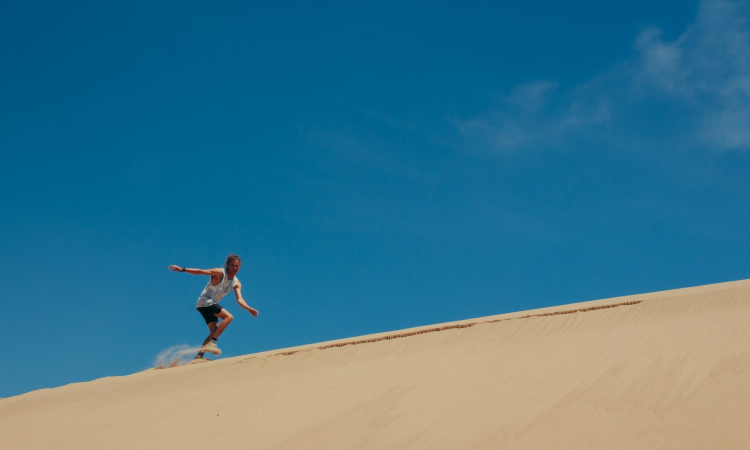
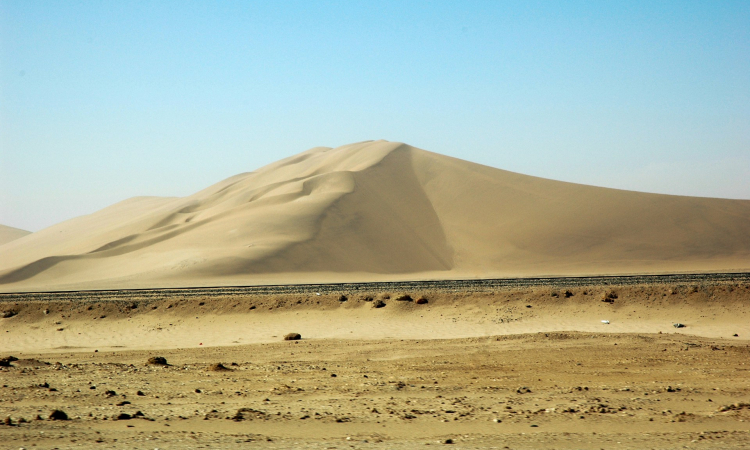
Walvis Bay geography and ecosystems are shaped by a rare meeting point where the dry Namib Desert meets the nutrient rich Atlantic Ocean. This sharp contrast creates coastal wetlands, desert plains, lagoons, and marine habitats that support a high number of plant and animal species. Walvis Bay is one of the most important ecological areas along Namibia’s coast.
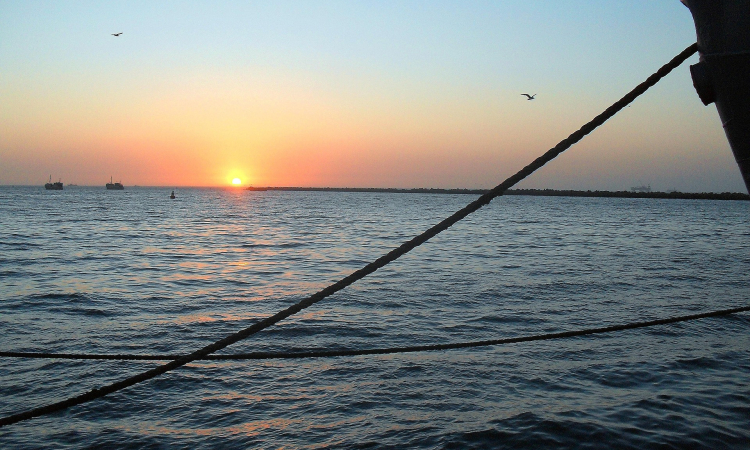
Walvis Bay is built around a natural deep water harbour. The bay is protected from strong Atlantic waves by a long sand spit called Pelican Point, which stretches for about 10 kilometers. This natural barrier keeps the harbour calm and has played a key role in the town’s development. Walvis Bay also lies at the mouth of the Kuiseb River, an ephemeral river that only flows after rare inland rainfall and often does not reach the sea.
The region has a cold desert climate with very low rainfall, averaging about 15 millimeters per year. Moisture mainly comes from frequent coastal fog formed by the cold Benguela Current. This fog is vital for many desert plants and animals that depend on it for survival.
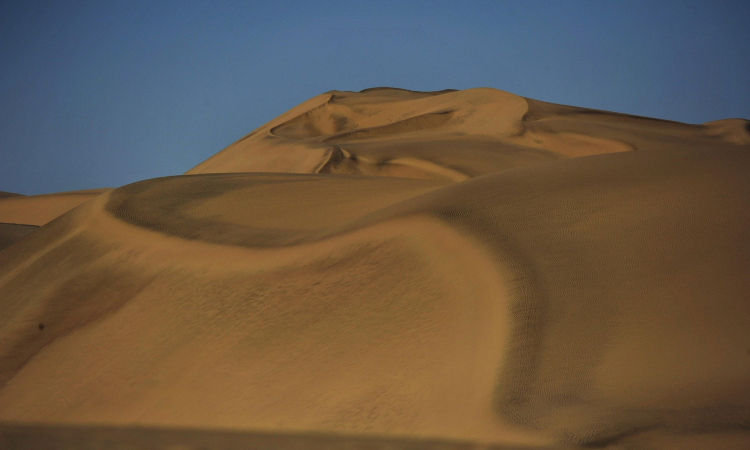
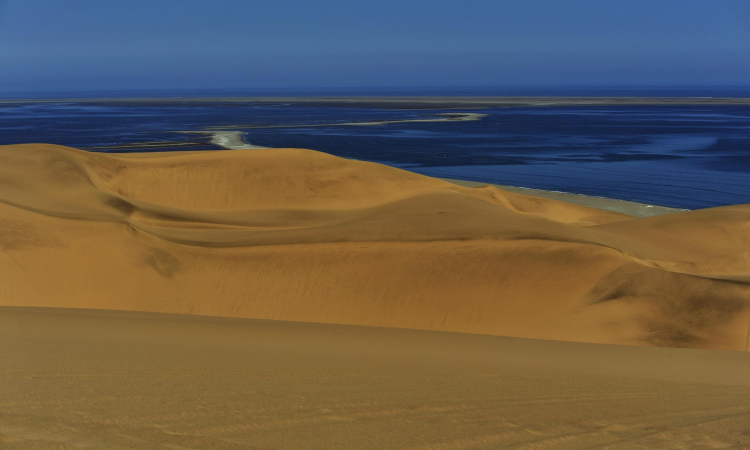
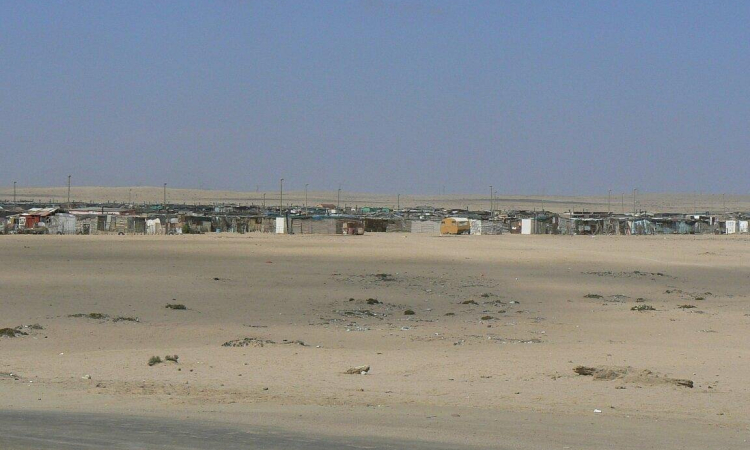
Several ecosystems exist side by side in Walvis Bay. The Namib Desert reaches right to the coastline, with dunes and gravel plains close to the ocean. South of the town are large salt pans used for commercial salt production. Offshore, the Benguela Current brings nutrients to the bay, supporting rich marine life.
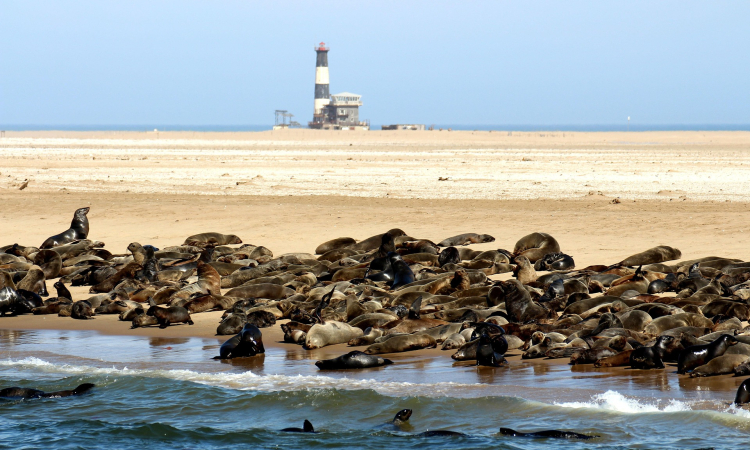
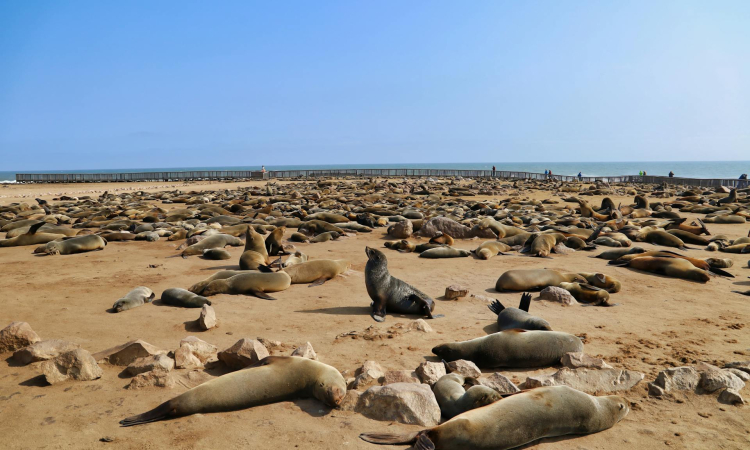
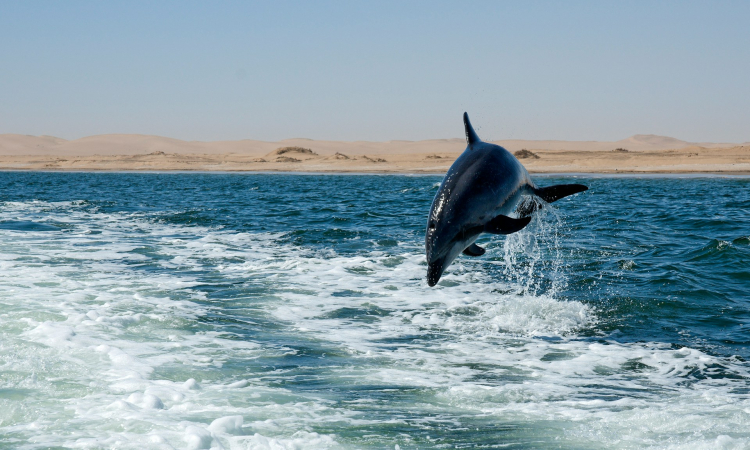
Marine habitats around Walvis Bay support fish, shellfish, and marine mammals such as Heaviside’s dolphins, bottlenose dolphins, and migrating humpback and southern right whales. Cape fur seals are also common residents along the coast.
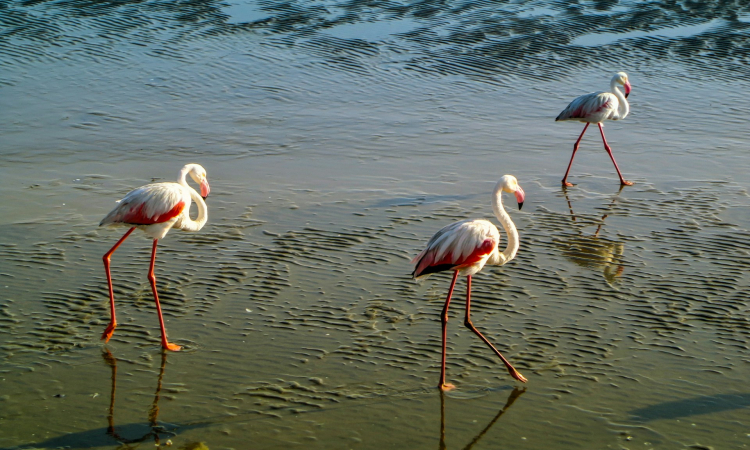
The Walvis Bay Lagoon is a Ramsar Wetland of international importance. It includes mudflats, shallow waters, and the Pelican Point sand spit. Together with nearby salt works, it provides feeding and resting areas for large numbers of birds.
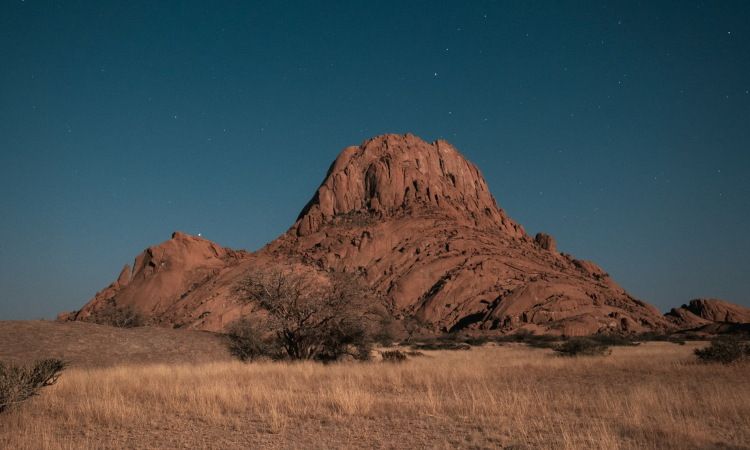
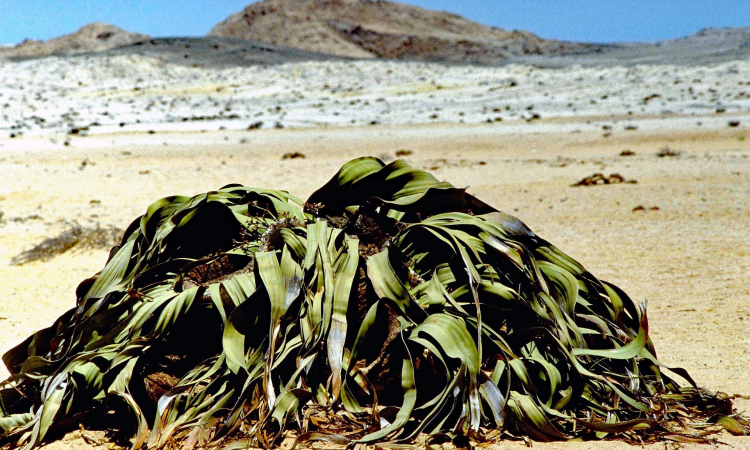
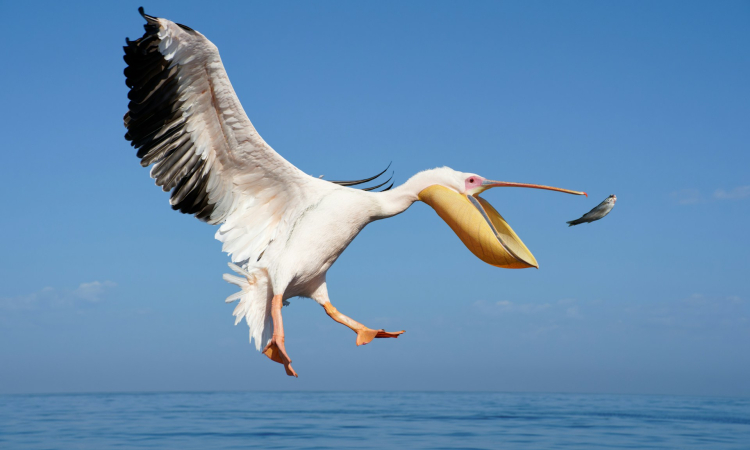
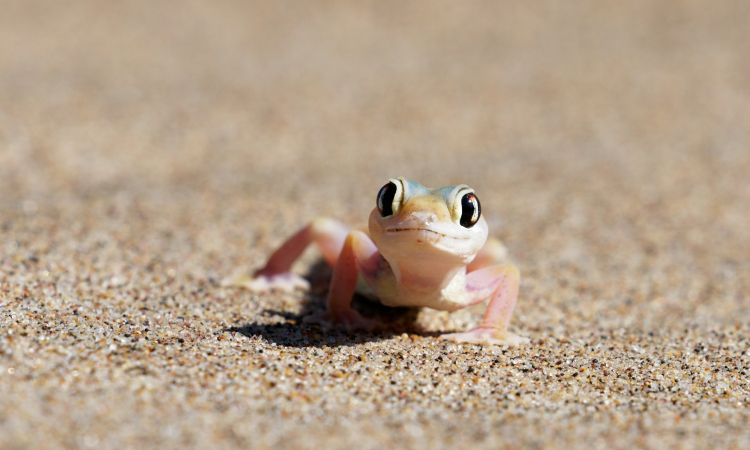
Walvis Bay is known as a birdwatching center, hosting more than 150 bird species and up to 250,000 birds during peak summer months. Flamingos, Damara terns, and Chestnut banded plovers are among the key species. Inland desert areas support oryx, springbok, mountain zebra, reptiles, and fog adapted plants such as those found in the nearby Namib-Naukluft Park.
Conservation groups and local communities work together to protect these ecosystems through monitoring, cleanup efforts, and sustainable management.