Walvis Bay birdwatching is among the best in Africa and attracts bird lovers from around the world. Walvis Bay is one of the most important coastal wetlands on the continent and is officially listed as a Ramsar site. Its lagoon, salt pans, peninsula, and nearby coastal wetlands create ideal feeding and resting areas for very large numbers of resident and migratory birds, including several endangered and near threatened species.
Key birdwatching areas in Walvis Bay
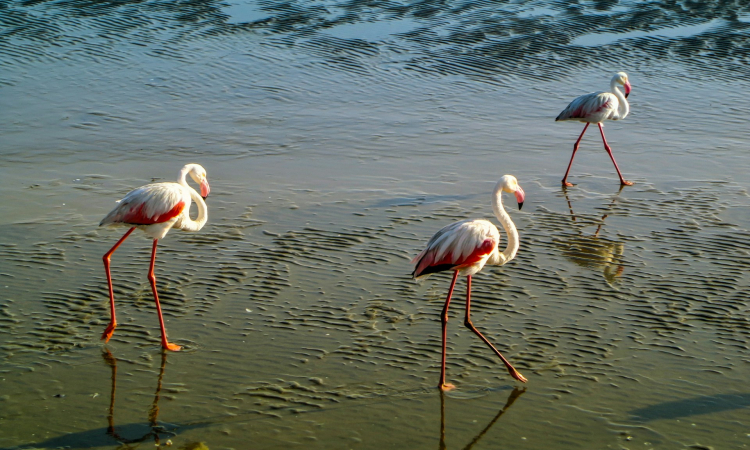
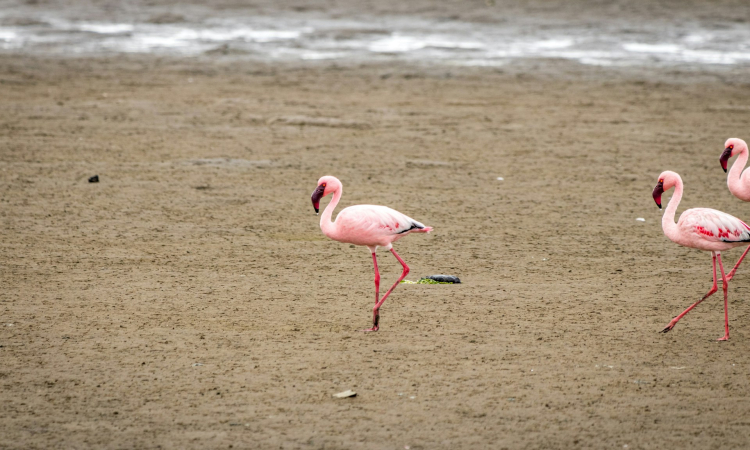
The Walvis Bay Lagoon is the heart of birdwatching in the area. This protected wetland supports tens of thousands of birds throughout the year. Flamingos, pelicans, and many other waterbirds feed in the shallow waters. A public esplanade runs along the lagoon, making birdwatching easy without the need for special equipment or permits.
The Walvis Bay Salt Pans are another major bird area. These large salt ponds have different salinity levels, which attract a wide range of bird species. The salt pans often appear pink due to natural organisms in the water and are famous for hosting huge numbers of flamingos and other wading birds.
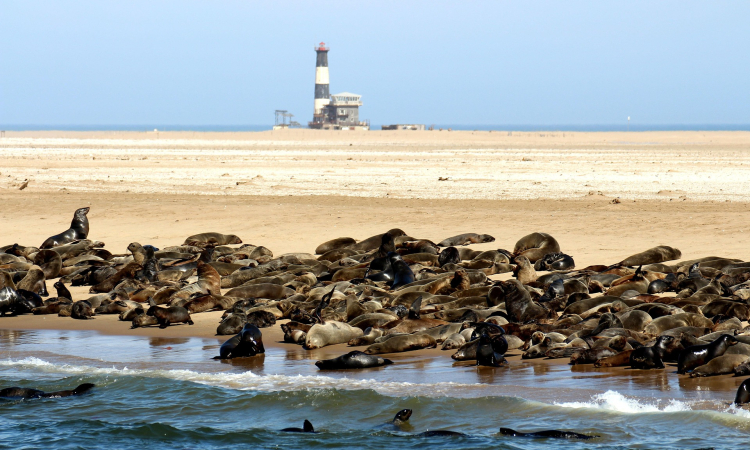
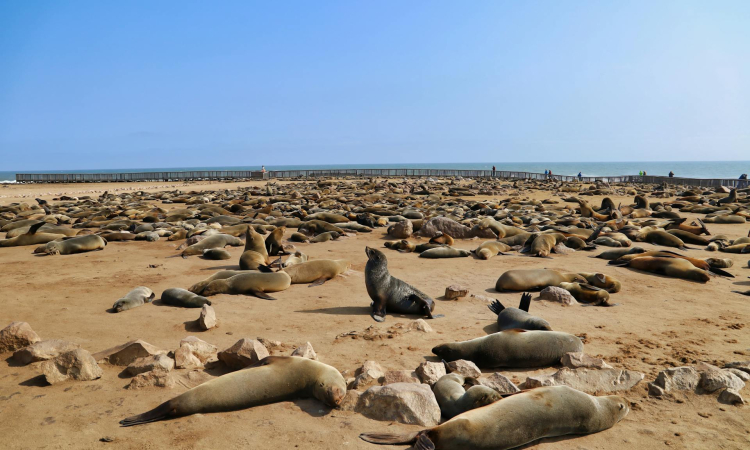
Pelican Point lies at the edge of the lagoon and Atlantic Ocean. It is home to a large colony of Cape fur seals and is an excellent place to see seabirds such as cormorants, terns, and pelicans. Birds are often seen resting, feeding, or flying close to the shoreline.
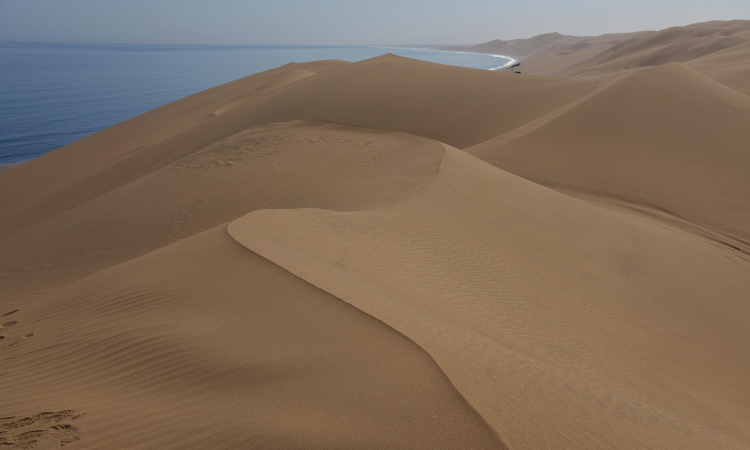
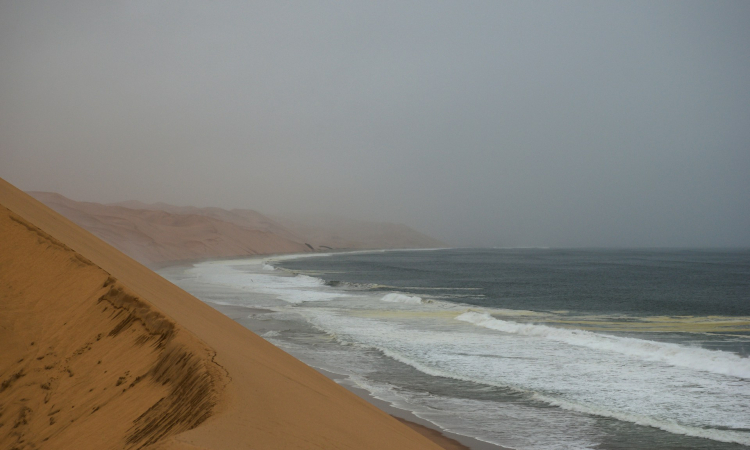
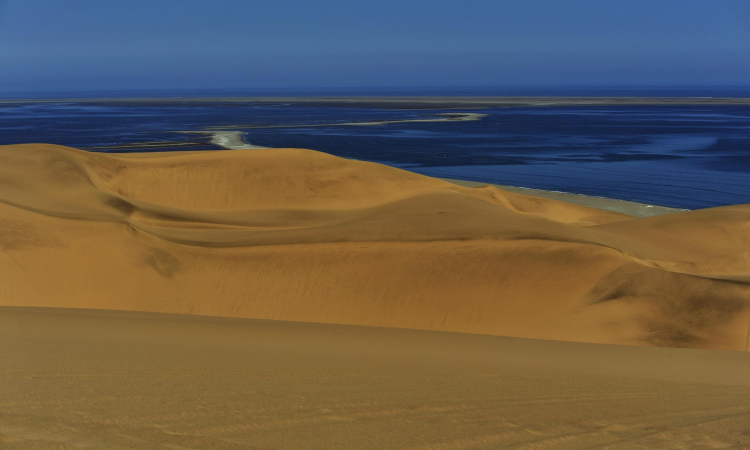
South of Walvis Bay is Sandwich Harbour. This remote wetland is reached by guided 4×4 tours. It is where large sand dunes meet the sea and supports flamingos and other waders in a quiet and protected setting.
Notable & endemic birds
Greater and Lesser Flamingos are present year round, with numbers increasing from October to April. The endangered Damara Tern breeds on coastal flats near Walvis Bay. The Chestnut banded Plover is a near threatened species found around the salt pans. African Black Oystercatchers are common along the coast.
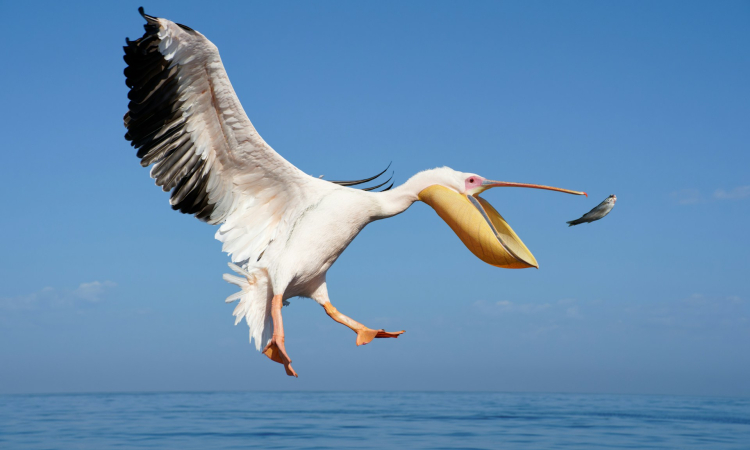
Cape Cormorants gather in large numbers near Pelican Point and on man made Bird Island platforms. Cape Teal and Cape Shoveler are resident duck species in the wetlands. African Penguins are rare but have been recorded in salt pans and coastal waters. Great White Pelicans are always visible around the lagoon. Gray’s Lark lives on nearby desert plains, and Hartlaub’s Gull is the most common gull in the area.
The best time for birdwatching in Walvis Bay is from October to April, when migratory birds arrive. However, excellent birdwatching is possible all year.