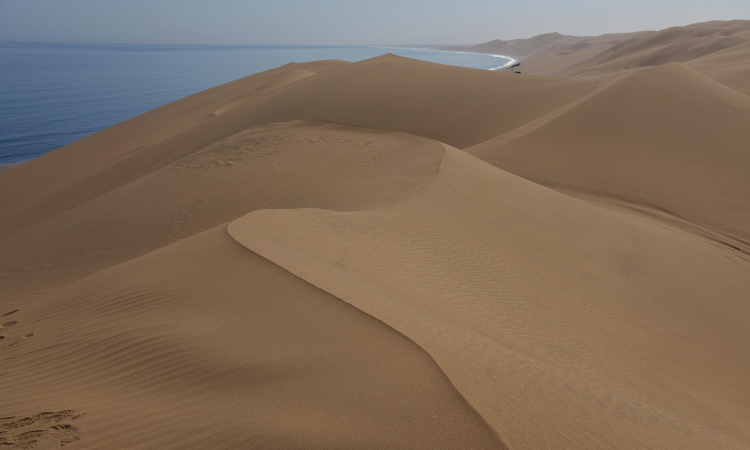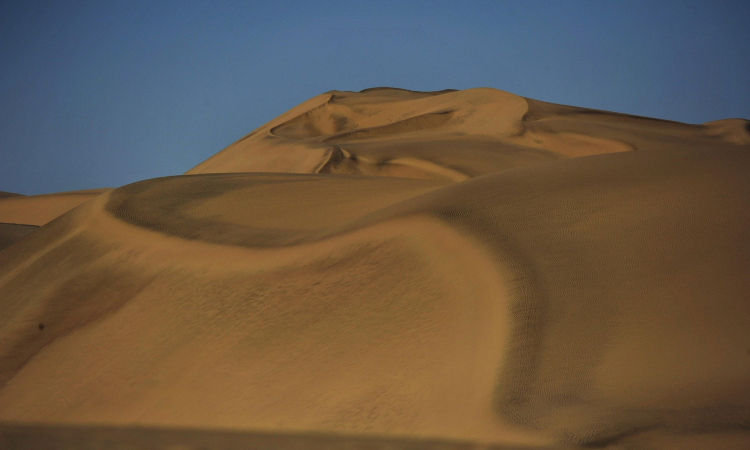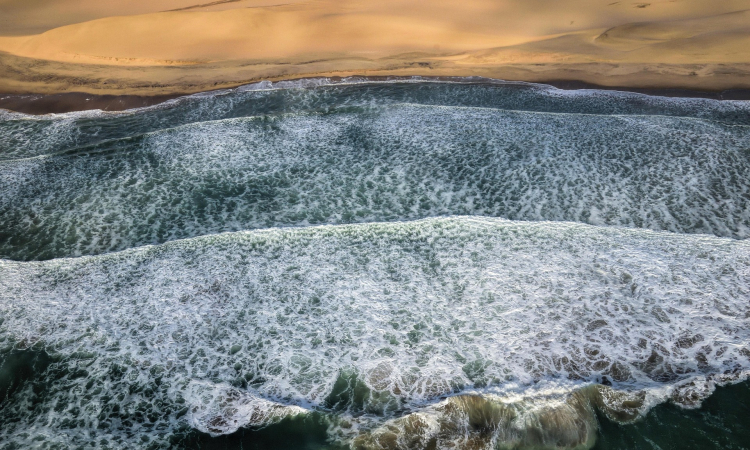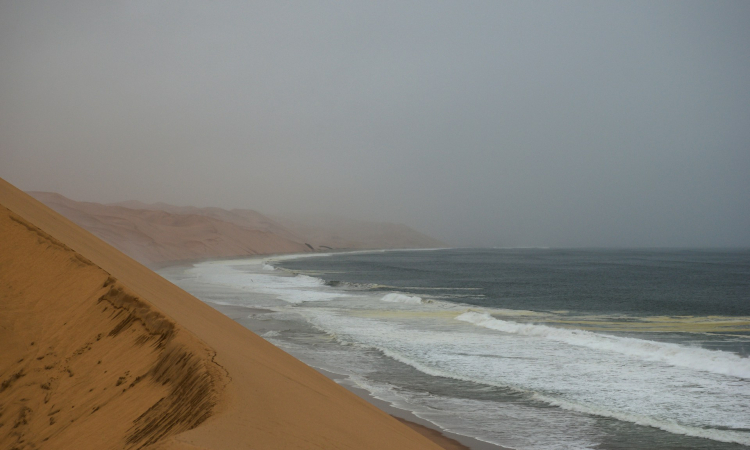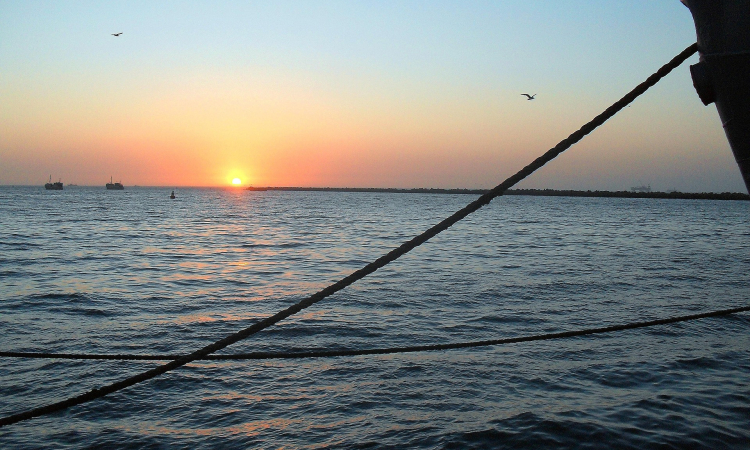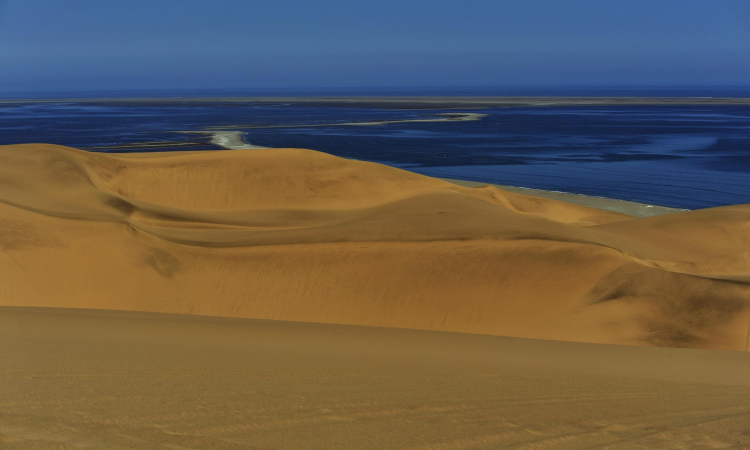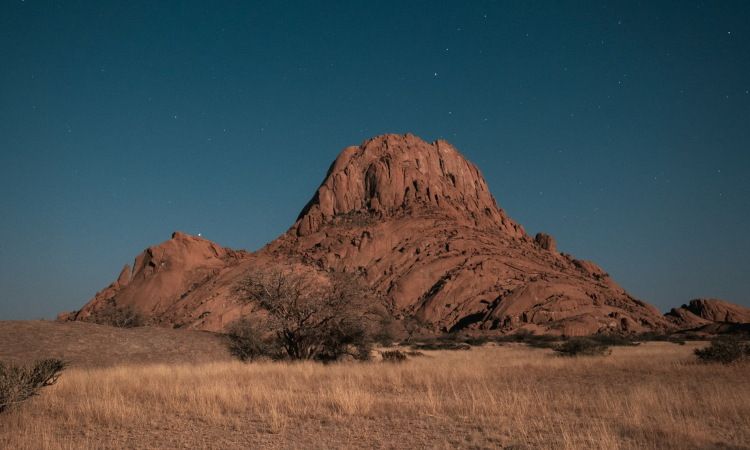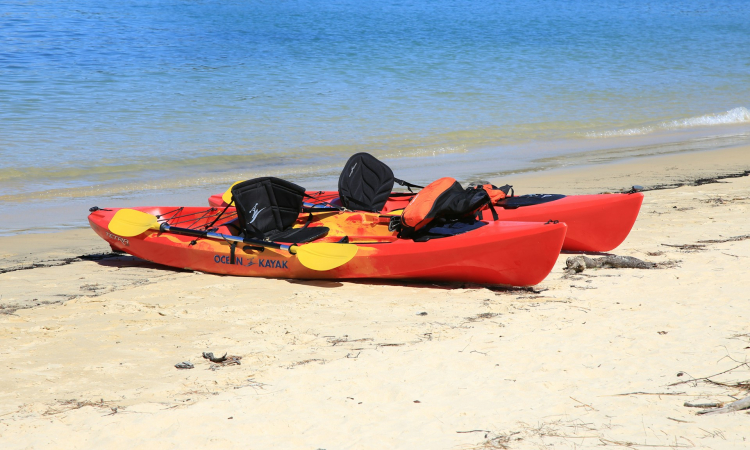
Want to learn about the animals & wildlife of Walvis Bay? Walvis Bay wildlife is one of the main reasons travelers visit this coastal town in Namibia. Walvis Bay is known for its rich marine life, large bird populations, and desert animals found along the coast and nearby dunes. Wildlife can be seen on boat cruises, kayaking trips, and guided 4×4 tours to the dunes and Sandwich Harbour.
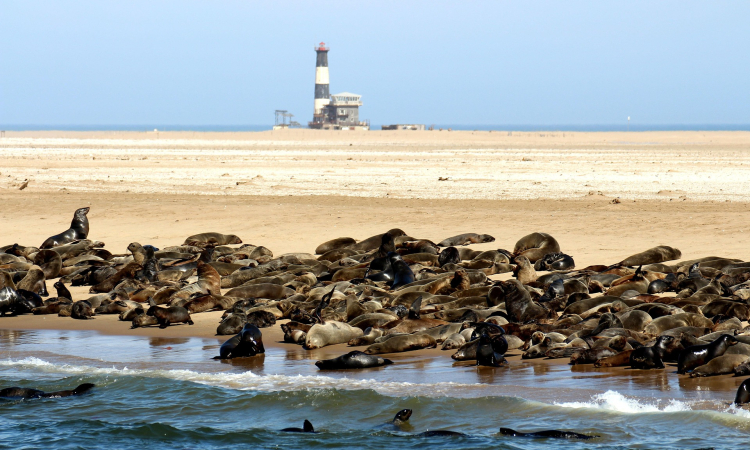
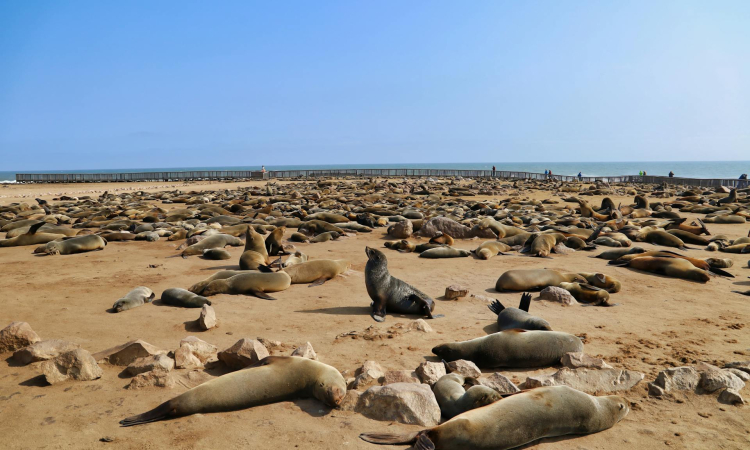
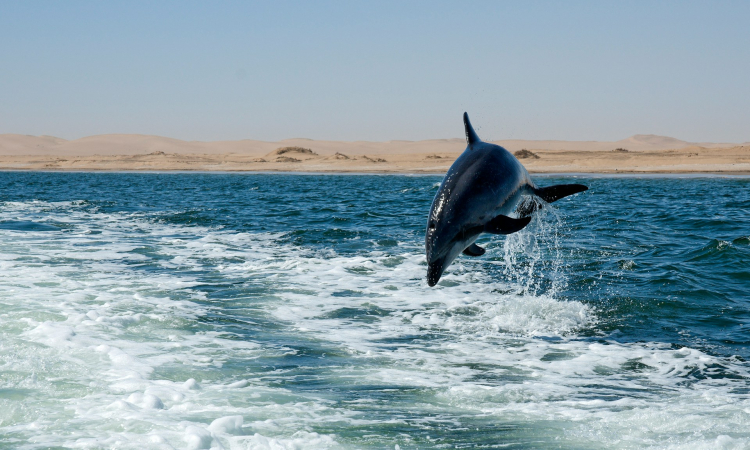
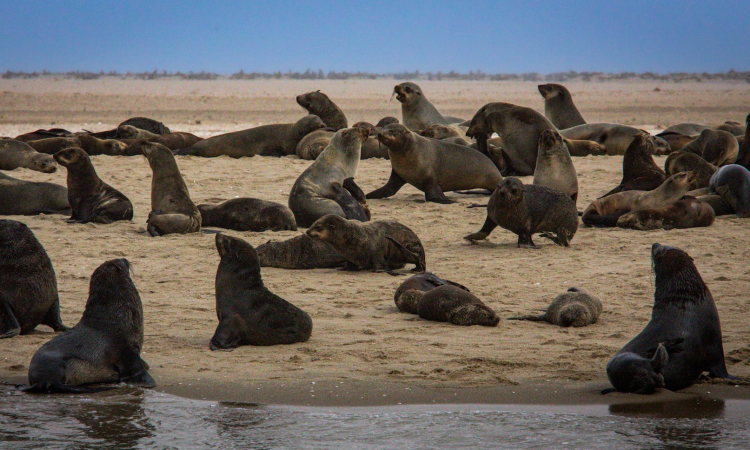
The coastal waters of Walvis Bay are home to many marine animals. Boat tours regularly spot Heaviside’s dolphins, which are common and found mainly along the Namibian coast. A large colony of Cape fur seals lives at Pelican Point. These seals can be seen from boats and during kayaking tours, where they often swim close to visitors. Humpback whales and southern right whales migrate along the coast and can be seen between June and November. Other marine animals sometimes seen include sunfish, also called Mola Mola, and leatherback turtles.
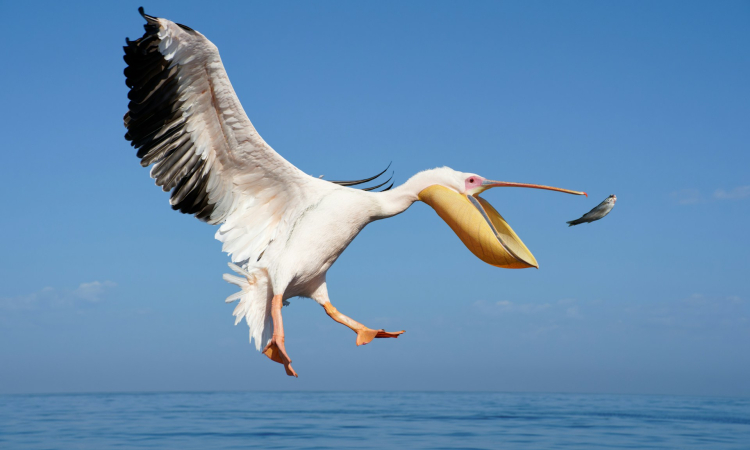
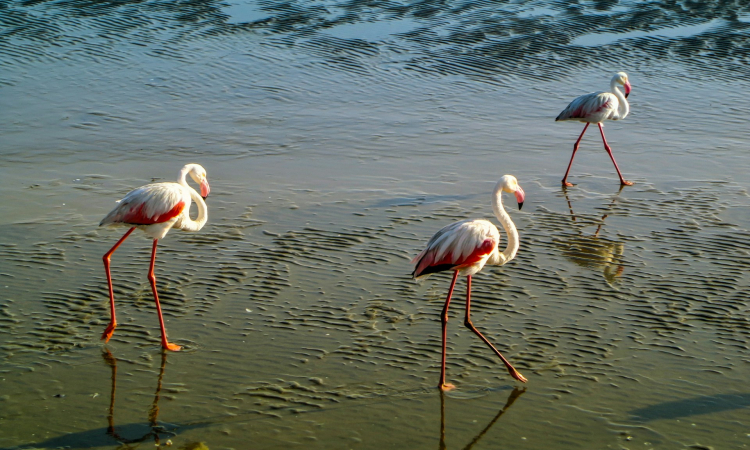
Walvis Bay is also one of Africa’s most important bird-watching areas. The shallow lagoon provides rich feeding grounds for many bird species. Thousands of lesser and greater flamingos gather at the lagoon and along the waterfront, especially from November to April. Great white pelicans are common and are often seen flying near tour boats. Other birds found in the area include cormorants, terns, and many coastal waders. The Chestnut banded plover, a near threatened species, nests along the coastline and salt pans.
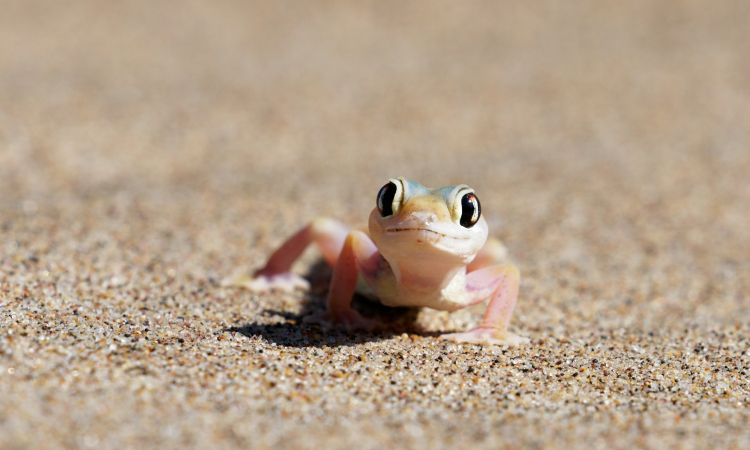
When traveling away from the coast toward the dunes and Sandwich Harbour, wildlife changes to desert species. Black backed jackals are often seen along the shoreline, searching for food. Brown hyenas are more shy but are sometimes spotted on guided tours. Springbok and oryx can be seen where the desert meets the ocean, especially around Sandwich Harbour. Smaller desert animals are also part of the experience, including geckos, lizards, and insects such as the fog beetle, which collects moisture from coastal fog.
The best time to visit Walvis Bay for wildlife is during the dry season from May to October, when temperatures are mild and conditions are comfortable. For the largest numbers of flamingos, the summer months from November to April are ideal.