Walvis Bay regulations and rules are important for residents, visitors, and businesses to understand before spending time in this coastal town. Rules in Walvis Bay fall under municipal bylaws, port regulations, environmental rules linked to nearby protected areas, and national traffic laws. Following these rules helps keep the town safe, orderly, and environmentally protected.
Municipal rules in Walvis Bay
The Municipality of Walvis Bay works together with local police to enforce public regulations within the town. One key rule concerns abandoned vehicles. A vehicle may not be parked in the same place on a public road in an urban area for more than seven consecutive days.
Public behavior is also regulated. In public areas, it is illegal to cause a disturbance by fighting, shouting, or arguing. Burning refuse in public places is not allowed. Creating a nuisance through strong smells, smoke, or other forms of pollution is prohibited. Discharging fireworks without permission is also not allowed. Noise control rules apply, and loud music, radios, or sound devices that disturb others are not permitted.
Port of Walvis Bay regulations
The Port of Walvis Bay is managed by the Namibian Ports Authority, also known as Namport. The port is a compulsory pilotage port. This means all vessels entering, leaving, or moving inside the port must be guided by a licensed Namport pilot unless an exemption is granted.
Small and pleasure craft must be properly registered or licensed. Rules control how these vessels move, where they may moor, and how navigation equipment is used beyond port limits. Environmental protection rules are strict. It is illegal to dump oil, waste, or any foreign matter into the port. Cleaning of vessels and control of smoke and fumes are also regulated. Cargo that exceeds 25 tons or certain size limits requires special arrangements with Namport before discharge.
Dorob National Park rules
Walvis Bay borders Dorob National Park, which is managed by the Ministry of Environment, Forestry, and Tourism. Certain activities inside the park require permits, including camping, tourism activities, and use of the off road vehicle area in the dune belt between Walvis Bay and Langstrand.
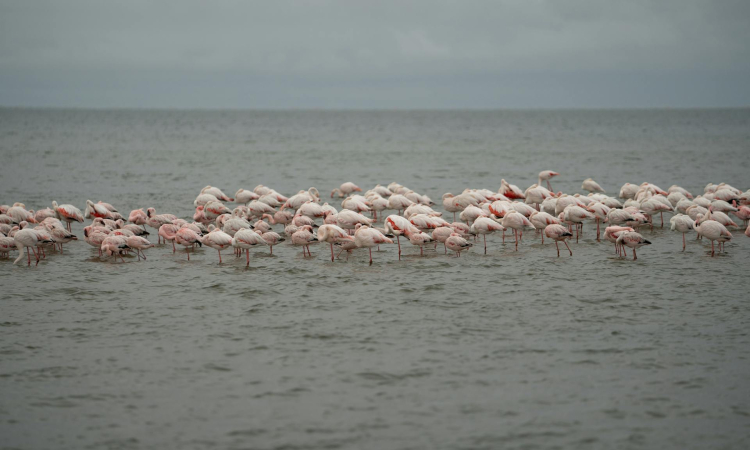
It is illegal to hunt, feed, capture, or disturb wildlife. Removing plants, rocks, or other natural materials is not allowed. Littering and pollution are strictly prohibited. Vehicles must stay on marked roads and tracks, except in approved ORV zones. Sensitive areas such as bird breeding sites are fully protected.
General road and traffic regulations
National traffic laws apply throughout Walvis Bay. Vehicles drive on the left side of the road. Speed limits are usually 60 km per hour in towns and 120 km per hour on highways. Gravel roads require slower speeds. Sea mist can make coastal roads slippery, so drivers should slow down and use proper lights. Seatbelts are mandatory, and using a mobile phone while driving is illegal.